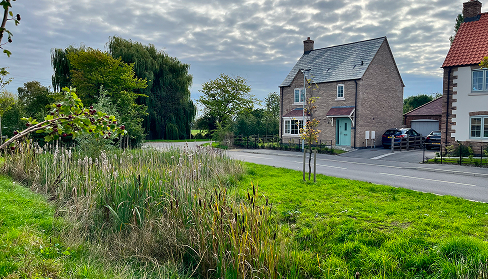
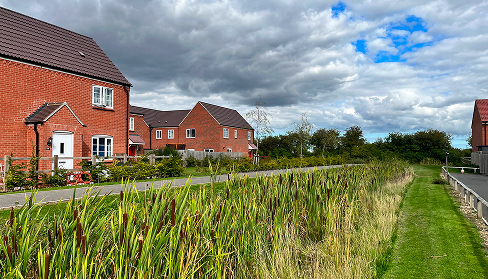
Before preparing a planning application, you should: review the Spatial Development Strategy, Local Plan and any Neighbourhood Plans; undertake initial context setting, including identifying opportunities and constraints; and approach us at the concept stage for free pre-planning application advice.
We will discuss flood risk management, sustainable drainage systems (SuDS) and street design to help create an efficient and effective scheme that saves both time and money. This will be an iterative process to agree the key principles before a planning application is submitted.
Groundwater monitoring is required to support your planning submission. If six months of groundwater monitoring, including the winter period, has not been completed at the point of planning application, we will request a planning condition requiring this work to be undertaken and submitted before development commences. Groundwater levels throughout the year will have a material impact on designing an appropriate drainage solution for the site.
You should also consider: reusing excavated material across the site where ground levels are to be raised, reducing the need for imported material (material can be classified for reuse where early engagement is sought); and ground strengthening techniques to minimise excavation and the importation of materials. Further advice can be provided on request.
Submit your planning application. We will assess the application and provide comments within 21 days. If you have engaged with us through detailed pre-application discussions, these should represent our final comments. Planning permission is then granted.
Approach us for Section 38 pre-application advice. We will discuss the approved layout and provide advice to inform the initial Section 38 application. This will be an iterative process to agree the key principles ahead of submission. Consider the phasing of the development.
The Section 38 process runs as follows: submit a Section 38 application; we will assess the application and provide comments; Section 38 technical approval is granted; the inspection fee is paid by the developer; the legal agreement is drafted; and the legal agreement is signed.
During construction, consideration should be given to the programme of works affecting the existing highway network, including utility connections, access works, and highway improvement works required by planning conditions. This will help minimise disruption to the local road network.
Construction key stages: construction works undertaken; maintenance period; submission of as-built drawings.
Highway adoption completed.
The following should be included within the Ground Investigation report: a site description, to include descriptions of topography, boundaries, access, vegetation, water features, ditches, overland surface water flow routes, site hydrogeology, the presence of any structures or anything else which may be of importance to the future use of the site, and an overview of site history; detail of significant constraints (including soluble rocks, landslides, shallow mining, shallow groundwater and made ground); detail of drainage potential (including depth to water table, permeability of superficial deposits, thickness of superficial deposits, permeability of bedrock and presence of floodplains); and detail of ground stability (including soluble rocks, landslides, shallow mining, running sands, swelling clays, compressible ground and collapsible ground).
The report should also detail made ground or fill: the full depth and nature of made ground or fill shall be proven, particularly along the lines of proposed adoptable pavements, and made ground shall be removed beneath the line of the road. Where pervious pavements, or infiltrating SuDS adjacent to the road, are proposed, soaked CBRs are required. A detailed infiltration assessment (including evidence of soil types and infiltration coefficients) should be provided in accordance with BRE Digest 365, at the same depths as the proposed SuDS features. Detailed evidence of groundwater table levels over a recent 12-month period should also be provided.
Details of the exploratory holes and/or trial pits excavated at the site, and laboratory work, must be provided (including an indication of where the testing was carried out (CBR/infiltration) and a comment on the accreditation status for each test). If the site is a brownfield site, it must be subject to contamination testing and an environmental risk assessment. Exploratory holes should be spaced between 50 m and 100 m adjacent to the line of the proposed carriageway and encounter all the soil types on the site.
Laboratory CBR testing (compacted using a 2.5 kg light hammer) should be spaced between 50 m and 100 m adjacent to the line of the proposed carriageway, and the top and bottom of the specimen must be tested. In-situ CBR methods on top of natural ground are not accepted for design purposes. Sufficient samples of each soil type must be taken from appropriate depths and tested at the relevant natural moisture content. Results of particle size distribution testing and BRE SD1 Suite tests should also be provided.
Where a SuDS feature is proposed, soaked CBRs are required in accordance with BS 1377 (1990) Part 4 clause 7.3. Any swelling of the samples should be recorded and reported. Samples must be taken from the anticipated formation level to 0.5 m below, except where there are different soil types, when the weakest material must be sampled and tested. In-situ and laboratory testing should be undertaken as appropriate. Additional exploratory holes should be undertaken where ground conditions are variable, particularly where they are weak.
The proposed design CBR will be agreed by the Highway Authority in order to derive the appropriate construction thicknesses. The lowest CBR result will be used for each phase, or the lowest for the site as a whole if this is single phase. A minimum in-situ CBR value of 30% and/or a minimum stiffness of 35 MPa will be required on all roads. CBR or stiffness values shall be determined by Plate Bearing Tests or Light Weight Drop Tests.
If laboratory CBR tests are not undertaken as part of the site investigation, the CBR value shall be assumed to be below 1.5%. This can only be assumed to be the case if the site investigation indicates the ground to be suitable. As cohesive (or clayey) soils are moisture susceptible, the strength of clayey sub-grades may vary due to changes in water content before or after construction. The maximum acceptable design CBR on cohesive sub-grades is 3% (up to 0.25 msa) and 2% on major estate roads (up to 2 msa). For carriageways and footways, not more than one in ten field dry density determinations, as detailed in BS 1377:Part 9 (clause 2.2), shall be less than 90% of the maximum dry density for that particular sub-base as determined by the vibrating hammer test in BS EN 13286-4.
Infiltration tests should be carried out at the location, depth and head of water that replicates the proposed infiltration design, should represent the variability of the ground conditions on the site, and should be no more than 150 m apart. A minimum of two trial pits should be carried out per site. Infiltration tests shall be carried out in accordance with the Bettess Report (1996) Infiltration Drainage Manual of Good Practice (CIRIA R156), which is based on the design approach in BRE 365 (1991).
Test pits are to be filled three times and the worst-case infiltration rate resulting is to be used when applying the appropriate factor of safety (as shown in Table 25.2 of the CIRIA SuDS Manual) for calculating the required design capacity for infiltration storage; the pit should achieve 75% empty for each test. Where infiltration is proposed as a means of surface water discharge, the ground investigation report should include a description of the testing process used, soakaway test results, laboratory test results for soaked CBRs and particle size distributions for the subgrade, pH values of the subgrade and the means of determining the infiltration rate(s). When assessing the ground for chemical content that is destructive to concrete, the standard used is BRE Special Digest 1:2005 'Concrete in Aggressive Ground'.
Please refer to the following guidance when preparing a Flood Risk Assessment (FRA): the National Planning Policy Framework (NPPF); Planning Practice Guidance (PPG); Government Flood Risk Assessments Guidance; and Development and Flood Risk Guidance for the Construction Industry (CIRIA C624), Appendix A2. We consider the term “land that may be subject to other forms of flooding” to include sites where the proposed development or change of use is located within an area identified as being at risk of local flooding. This includes flooding from surface water, groundwater and ordinary watercourses, based on the following evidence sources.
Surface water flood risk is identified where a site falls within the 1 in 100 year flood probability extent shown on the Environment Agency Surface Water Flood Map.
Groundwater flood risk is identified using the Susceptibility to Groundwater Flooding dataset available from the British Geological Survey, and the Joint Lincolnshire Flood Risk and Drainage Management Strategy.
Ordinary watercourse flood risk is identified where development is located within 10 metres (measured horizontally) of the light blue line depicting an ordinary watercourse upstream of the Environment Agency Main River extent, as shown on the Main River Consultation Map.
Historic flooding risk is identified through Lincolnshire County Council Section 19 Flood Investigation Reports, and evidence of other known historic flooding incidents.
Where flood risks to a site include both local and non-local sources, the Flood Risk Assessment (FRA) and Flood Risk Statement (FRS) should consider all sources of flood risk and any required mitigation measures within a single document. The interaction and combined impacts of all flood sources should be assessed. Particular consideration should be given to downstream flood risk, drainage impacts on receiving watercourses, and the capacity of receiving watercourses to safely convey flows from the development site. Hydraulic assessments of downstream impacts and mitigation measures should extend as far as necessary to demonstrate the point at which any increase in flow velocity or flow volume becomes negligible.
Developers should avoid locating residential properties in low-lying areas wherever possible, as floodwater will naturally accumulate in these locations. Where this is unavoidable, appropriate mitigation measures should be incorporated, including raising finished floor and threshold levels, providing additional drainage infrastructure, and other suitable flood resilience measures. For further guidance, refer to Improving the Flood Performance of New Buildings: Flood Resilient Construction (2007).
Flood exceedance routing plans should clearly demonstrate flood flow directions, flood depths and flood velocities. This information should be shown across the entire development site. Flow paths should be generated using computer modelling software that incorporates all proposed drainage infrastructure, existing drainage assets (where applicable), proposed finished ground levels, proposed finished floor levels, and natural and artificial obstructions. Alternatively, developers may submit a computer-generated model for review and interrogation.
Flood flow paths generated within a development should be contained within the site's boundary wherever possible. In exceptional circumstances where flow paths extend beyond the development boundary, the developer must demonstrate that these flows will not adversely affect neighbouring land or property. The following limits apply: maximum flood flow depth 100 mm; maximum flood flow velocity 3.0 metres per second.
Please include the following in your Flood Risk Assessment: flood risk vulnerability classification; EA flood zone classification; and surface water flood zone classification. Confirm whether the development site, or part of it, is identified as being at risk of flooding from surface water and/or groundwater sources within available documentation; whether the Local Planning Authority, Lead Local Flood Authority or Environment Agency are aware of any existing, historical or potential flooding problems that may affect the site; whether any Section 19 reports have been recorded in close proximity to the site; whether the site is located within an Internal Drainage District (IDB) or IDB Extended Area, and if so which one; whether it is located within 10 m of a flood or drainage structure; and whether there is an existing property on, or next to, the site at the same internal threshold level.
Also confirm whether the physical characteristics of the site suggest it may be prone to flooding; whether the development is within a natural or artificial hollow, at the base of a valley or at the bottom of a hillside slope; whether historical maps indicate any likelihood of flood risk; whether the names of surrounding roads, areas or houses suggest the possibility of seasonal or historical flooding; whether the site is likely to involve excavation or construction below existing ground levels (excluding foundations); whether the land use upslope may encourage the generation of overland flow onto the site; whether there are artificial drainage systems on or next to the site, at the same level or upslope; and whether the site is located upstream of a culvert which may be prone to blockage.
The assessment should demonstrate an understanding of natural flow paths (above and below ground level) and the mechanisms of flooding at the site; produce a preliminary qualitative assessment of the potential impact to the site and downstream of, and constraints to, the proposed development; and, for each identified flood risk source, describe how flooding would occur, with reference to any historic records where available. It should set out the existing surface water drainage arrangements for the site, the existing rates and volumes of surface water runoff generated by the site, and an assessment of the suitability of the receiving watercourse, if applicable.
Finally, the assessment should address how flood risk at the site is likely to be affected by climate change; how the site or building will be protected from flooding; the proposed impacts of the development; how the proposed development and protection measures will not increase flood risk elsewhere; any opportunities the development offers to reduce flood risk elsewhere; what flood-related risks will remain after protection measures are implemented and how design exceedance flows will be routed away from property; and sensitivity testing to demonstrate that the estimates of flood risk to, and arising from, the site are not overly dependent on the assumed model parameters.
Calculations should demonstrate the performance of the designed system for a range of return periods and storm durations inclusive of the 1 in 1 year, 1 in 2 year, 1 in 30 year and 1 in 100 year plus climate change return periods.
Storm durations up to and including 6 hours are expected unless other Risk Management Authorities specify greater.
The system shall be designed so that no internal flooding occurs in the 100 year return period. Any flooding from the drainage system in this return period shall be routed and stored in designated flood storage areas away from any properties in a location which will cause minimal disturbance to the development. The temporary holding of flood water on major access roads is not permitted under any circumstance.
The proposed drainage design shall be simulated with both FSR and FEH rainfall data. Rainfall data shall be adjusted in accordance with the Government's latest climate change impact predictions. The rainfall data methodology with the greater impact on simulations shall be used; however both should be submitted for clarity. The greater impact may vary by storm duration and return period.
Industry recognised software may be used provided its input data and output files are compatible with Causeway Flow. Proprietary manufacturer/supplier software may be used, provided that their materials are intended to be used on the development and they have been approved, prior to design, by us. When proprietary software is used we may request alternative calculations to confirm the outputs. If the developer opts to change material supplier on site then we may request new calculations.
The Wallingford Procedure shall be used to design drainage systems up to and including 5 year storm return periods with durations up to and including 120 minutes.
No latent storage allowance shall be made within the hydraulic calculations (e.g. gully pots and laterals). In Microdrainage this is referred to as the MADD factor and must be set to zero.
The condition of a receiving water body or drain during the required storm simulations must be taken into account. Should the outfall be submerged or impeded in any way then you will be required to undertake further simulations of the highway drainage system under such conditions. Where discharge is proposed to a riparian watercourse you should demonstrate that it is fit for purpose by providing a report detailing the condition of the bed, banks and structures to ensure there is no impediment to flow until it discharges into a publicly maintained network.
Should you wish to drain any part of a proposed development to an existing highway drainage system, you will be required to submit a full survey of the existing system together with calculations which adequately demonstrate its hydraulic and structural suitability to accept additional flows.
Should it become necessary to improve the existing highway drainage system within the existing public highway it shall be delivered under Section 278 of Highways Act 1980 by Agreement with the HLLFA. You should be aware that particular conditions may be imposed for connections to brick sewers, large diameter sewers or where adverse conditions make construction of a manhole difficult. The Undertaker or HLLFA may elect to make the connection at the developer's expense. This should be taken into account when designing the system. In general, the connection into an existing highway drainage system will require the construction of a new manhole.
Before entering or breaking into an existing sewer or drain, the Developer must obtain the permission of the Authority responsible for the pipeline or watercourse.
All highway drainage systems shall be situated within land which is to be adopted by the HLLFA; the only exception being where the development is to drain to a remote outfall away from the development. In this instance, where the final outfall pipe leaves the development, it may by agreement cross third party land and will be subject to the required wayleaves/easements and consents which will need to be provided to the HLLFA in the form of a Deed of Easement.
Only in exceptional circumstances will elements of the highway drainage system be permitted within an area of public open space, subject to the written approval of the LPA. Where such circumstances do arise, you will be required to provide a Grant of Easement giving us right of access at all times for maintenance purposes.
Please seek our advice if the easement is to be landscaped as there may be restrictions on the layout and species permitted. There shall be no physical obstructions or structures on, above or below the easement route with the exception of minor services and simple fencing that may cross the route perpendicularly. Minimum easement widths are shown below. Where other pipe layouts are proposed (e.g. filter drains) then please seek our advice.
| Dia up to 449 mm |
|---|
3.0 m |
Seek advice |
3.5 m |
Seek advice |
4.0 m |
Seek advice |
5.0 m |
Seek advice |
4.0 m or 2 m from the outside edge |
Seek advice |
Note 1: Distance shall be taken as centreline of pipe unless otherwise stated.
In accordance with Section 59 of the Highways Act 1980, developers should be considerate of causing damage to the existing highway during construction and implement mitigation measures as necessary. Should extraordinary expenses be incurred by the Highway Authority in maintaining the highway by reason of damage caused by construction traffic, the Highway Authority may seek to recover these expenses from the developer.
Before work can start on a development site, there should be an approved Construction Management Plan and SuDS Method Statement. These will detail the measures to be provided to manage the impact on the existing highway network and prevent the risk of flooding and pollution on and off site during construction.
The Construction Management Plan should include a phasing plan, which should consider the location of site compounds (including material storage) and the sequence of works, including show homes and visitor parking; and construction routeing, with details and plans for the construction route to site, giving consideration to traffic-sensitive areas along the route such as schools.
It should also detail site operations, with details and plans of: construction traffic routes on site; the site compound and storage of plant and materials; vehicle turning facilities allowing for loading and unloading; parking for site operatives and visitors; wheel washing facilities; refuse collection; and utilities works including service diversions, covering all works required within the public highway and including details of collaborative working.
Further details should cover scaffolding, skips and hoarding needed within the existing highway; pollution control arrangements, including any possible water quality issues; and tree protection. All retained trees and areas for new trees should be protected during construction, with reference made to BS 5837:2012 detailing the requirement to avoid contamination and compaction of soil and protect trees and root systems during construction.
The SuDS Method Statement should include details and plans of the method of surface water management during construction. This could be: early construction of the permanent drainage system, including how water will be channelled into systems during early construction (drainage grips/channels), establishing the outfall, and protection methods during construction (for both the filter strip and underdrain/infiltrating base); a temporary drainage system, with consideration given to infiltration, groundwater and establishing the outfall; or use of existing drainage systems, with pollution control measures, which applies to brownfield sites only. In addition, the use of perimeter drains with established outfalls may also be required.
The statement should also set out measures to ensure the formation of vegetation in SuDS features, including due consideration of seasonal planting, turf and similar. Further details can be found in the CIRIA SuDS Manual (C753).
SuDS protection methods that may be considered are: geotextile gully guards on positive systems; a sacrificial additional geotextile layer on swales and filter drains; a sacrificial additional geotextile layer where permeable sub-base is proposed; the use of sediment traps; the use of alternative temporary drainage on permeable paving sites; physical barriers around complete SuDS features to prevent access; and vehicle routeing through the site to avoid permeable surfaces becoming polluted. Maintenance should include regular clearance of temporary drainage and regular pumping of attenuation areas where necessary.